Showing posts with label new books. Show all posts

Wednesday, January 23, 2013

This day could be your last

I am reading a really exceptional book at the moment, called 20,000 Days and Counting.


It's a work of Christian self-help, and is constructed in quite a post-modern way, but it's a terrific read, and really quite incredibly inspiring.
I discovered in it a quote from Emerson that I hadn't encountered before, and I thought I'd share it with you:

Ralph Waldo Emerson


"One of the illusions [of life] is that the present hour is not the critical , decisive hour. Write it on your heart that every day is the best day in the year. No man has learned anything rightly until he knows that every day is Doomsday."

Ralph Waldo Emerson

Wednesday, July 4, 2012

New Self-Help Books in July

I really do have to be bringing my thesis to a close some day soon, but that doesn't mean I am going to stop reading self-help books. Au contraire. Here is my latest pile, almost none of which are destined for inclusion in my dissertation. But I couldn't resist. From the top:


Happiness is Here and Now by V. Vajiramedhi - I bought this one in Thailand. It is a collection of questions and answers with a Thai Buddhist monk, packaged as self-help lifestyle advice. Quite good.

Meta-Secret: The Next Level by Mel Gill - No idea what this one is, but it is such an obvious cash in on The Secret franchise that I had to get it. Another purchase from Bangkok. 

Change Your View, Change Your Life by Ven. Acarya Thoon Khippapanyo - More Thai Buddhism packaged as self-help.

Why Be Happy When You Could Be Normal? by Jeannette Winterson - OK, I know this one is memoir, but I have been interested in how it is being presented as a kind of anti-self-help book..

The Rational Optimist by Matt Ridley - This guy is really interesting, and I have been following him on-line for a while.

Think and Grow Rich by Napoleon Hill - Of course I have read this one over and over again - it is one of the principle reference points for my dissertation. But the two 70s paperback versions I own are literally falling apart, so I snapped up this nice hardcover version when I saw it on sale.

Break Through Pain by Shinzen Young - Purely for personal reasons.

High Mysticism by Emma Curtis Hopkins - The uninitiated might be asking why a book of this title is included in self-help, but Hopkins is very much the grandmother of the self-help movement, and until now I have only read one of her books (they are exceedingly difficult to get).  She was an associate of Mary Baker Eddy and called The Mother of New Thought.

This is How by Augusten Burroughs - Another very strange new release by a mainstream author who is trying to present (I think) some distilled self-help wisdom.

The Book of Awakening by Mark Nepo - Didn't Oprah have something to do with this?

Enchantment by Guy Kawasaki - I have been wanting to read this for about a year and finally I got a copy. Guy Kawasaki rocks.

Fell's Official Know-It-All Guide to Writing Bestsellers by Stanley J. Corwin - I'll let you know if it works.

The Prosperous Heart by The Prosperous Heart & Emma Lively - Cameron is, of course, the creative genius behind The Artist's Way. I always like to keep up with her work. 


Saturday, May 19, 2012

Currently Reading: The Magic

Rhonda Byrne is a self-help superstar. The once-obscure television producer from Australia became a household name in 2006 when she produced a simple talking-heads-style film about New Thought ideas and the Law of Attraction and released it as The Secret. Someone - it is not clear who - came up with a simply brilliant promotional campaign based on networks and influencers and releasing different versions of the film to key tastemakers and influencers. I worked in a New Age bookstore at the time, and remember dozens of people coming in and telling me how they had been given a version of a new film that was going to change the world....
It was a whisper-campaign that worked, and the film was quickly turned into a book which became a mega-seller which culminated in Byrne's appearance on Oprah. The Secret became a cultural artefact, and was ridiculed and scorned by people on all sides, all the while speaking in some way to the general public as it went on to sell millions of copies across the world.
Byrne has herself never been much of a self-promoter or even a public figure - she rarely gives interviews, and is something of an enigma. This year she has quietly released a new book called The Magic. Its emphasis is on gratitude and on the active expression of gratitude. This, says Byrne, is the key to a successful life. By actually invoking the words "thank you" we are employing a a metaphorical magic spell, hence the book's name.
For all of her critics and detractors (and they are myriad), Rhonda Byrne, or her team, is good at producing simple, clearly-expressed texts that communicate very well the basic tenets of New Thought, a religious idea that dates back to the 1860s. I am, in fact, a fan of Byrne's work, and I think she is one of the truly great post-modern authors, producing books that owe more to the traditions of television, film, advertising and  the oral traditions of Protestant Chrstian worship than to stale literary traditions and formats.
Though her message is repeated constantly, there is not an ounce of fat in The Magic - it has been edited to perfection and is an inspiring and entertaining read.
The central message of the book is that gratitude must be cultivated self-consciously. Byrne connects this to biblical narrative and the Western Mystery magical traditions, employing her usual scattershot approach to references, citations and quotes from across the canon of self-help.
I'm interested in the fact that this book kind of launched itself, with very little fanfare. I had no idea it even existed till I was browsing through Kinokuniya bookshop in Bangkok a month ago and saw a modest pile of the books on a well-placed table. Considering just how many copies of The Secret were sold, you would think the publisher would make more of a song and dance about a new book from the same author. Perhaps Byrne's famous reticence and shyness have an impact here. As it is, each new instalment in The Secret franchise seems like a surprise.
I call it a franchise deliberately. The Magic is designed and branded in such a way as  to advise the reader that this is an extension of The Secret. The cover art is an extension of The Secret's usual antique magical motif, and the first thing you see on the cover is the imprint of The Secret itself, above the title of the book. I think we are being presented with a series here, the publisher determined to remind the reader of the famous  book in order to sell this new one.
The book's format appeals to me because, unlike The Secret which was the presentation of quotes and ideas designed more for occasional inspiration than applied reading, The Magic is presented as a practical workbook, filled with 28 exercises designed to enhance the application of magical gratitude in your life.

"You will be captivated while you read this life-changing knowledge, but without practicing what you learn, the knowledge will slip through your fingers..."

It's an interesting exercise because there is not a great deal of literature that deals with the concept of gratitude as an exercise in mental and spiritual development.
Interestingly, a prominent Australian writer contacted me recently to tell me he has been working his way through The Magic and getting a great deal from it, because it was dealing in concepts and techniques that he had never actively considered before.

Friday, December 9, 2011

New Books - The Last Batch?


This might be it. My dissertation is due on February 9, and I have reached the point where I really just have to write up all teh research I have already done - there is no time to embark on some new tangent.
So here is the last hurrah (hopefully) - the last few books I have purchased for my own research.
From the top:

How I Would Help the World by Helen Keller - I think this is just her book My Religion re-titled and re-packaged for a more secular 21st century audience. In it she expounds her understanding of Swedenborg's theology and how it impacted her life and made her the person she was.

Tiffany's Swedenborgian Angels by Mary Lou Bertucci and Joanna Hill - A beautiful book which discusses the symbolism of the exquisite stained-glass angel images Tiffany created for a Swedenborgian church in the USA.

Flow-dreaming by Summer McStravick

Hegel's Political Philosophy ed by Walter Kaufmann

Goethe's Poems

Thursday, October 27, 2011

New Books for the Thesis

The end is in sight, but if anything that means I need even more books. I've had it with going to the library by now - I am at home writing up, and when I need a book I want it right next to me with a cup of coffee and my favourite harp concerto.
So here's what I decided I couldn't live without, and what I will be reading over the next couple of weeks:


The Heart of William James ed. by Robert Richardson - My obsession with William James continues apace.


Inevitable Grace by Piero Ferrucci - Ferrucci was a student of Assagioli, a radical Italian psychotherapist who was a major influence on the work of Australian author Stephanie Dowrick.


Derrida for Beginners by Jeff Collins and Bill Mayblin - Here I am almost at the end and I still don't really have my head around theory or philosophy. I keep bumbling ahead, however, doing my level best. And still I'm at this level.


George Herbert Mead: A Unifying Theory for Sociology by John D. Baldwin - Just looking at this book terrifes me.


How to Know God by Deepak Chopra - Much more familiar terrain here.


Reason in the Age of Science by Hans-Georg Gadamer - What the hell was I thinking? I remember - Stephanie Dowrick references Gadamer in her book on Rilke, and he seemed fascinating. Now he just seems terrifying.


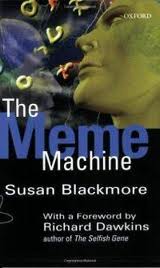
The Meme Machine by Susan Blackmore - No idea.


Self-Help Inc. by Micki McGee - I have actually read this book several times over, but always from the library. I figured it was time to get my own copy.

Tuesday, September 27, 2011

New Books


I am madly, madly scurrying to finish my thesis, and beginning to realise the annoyance of not having key books at home. So in my attempt to remedy this I have a new pile of books exclusively for research. From the top:

Jung and Tarot by Sallie Nichols - Jung becomes increasingly important as my dissertation progresses, so I am trying to buy what I can cheaply. And this subject would normally intrigue me anyway.

On The Social Contract by Jean-Jacques Rousseau - The thing that bothers me with this is that I once owned a copy (from my old days of studying political science) but got rid of it in one of my book purges. Never do a book purge.

The Rampa Story by Lobsang Rampa - I think I read this when I was a teenager. When I was putting together a seminar on Buddhism and self-help I suddenly found myself referring to Rampa a lot - have to go back and re-visit the old rogue.

The Mystic Life of Alfred Deakin by Al Gabay - Theosophical history in Australia.

True You by Janet Jackson - Well....it IS self-help, though. I love Janet!

Thorson's Principles of Jungian Spirituality by Vivianne Crowley - I'm a bit of a dunce, and when I discovered this one at the Theosophical Society library I actually found it immensely helpful in understanding Jung, so I bought my own copy.

The Buddha Book by Lillian Too - This is just such a beautiful book! Ostensibly for my chapter on Eastern Religion.

Four Archetypes by C. G. Jung - My supervisor was very keen on me extending on the uses of Jungian archetypes in self-help, so I thought I'd better read up.

Meditations by Marcus Aurelius - Funny how this has been revived in recent years as a self-help book. One discoveres it cited everywhere now. Thought I should actually read the whole thing.

Sartre in the Seventies by Jean-Paul Sartre - The seventies were pretty cool, and I wanna get a bit of Sartre in to my thesis.

Mysticism: The Experience of the Divine - This is very slight, and not at all what I expected. Doubt it will be useful.

Adieux: A Farewell to Sartre by Simone de Beauvoir - See above.

C. G. Jung Speaking by William McGuire and R. F. C. Hull

Aion by C. G. Jung

Thursday, September 8, 2011

Some new books to explore

In the absence of time to read a lot of books very carefully and provide detailed, academic and nuanced reviews, here are some overviews of books I've been looking at:


Feel the Fear and Do It Anyway is one of the self-help classics of the 1980s. Apart from having an exceptionally good title, it is also written in a lively and engaging manner, is intensely practical and on the whole was probably deserving of its bestseller status. The author Susan Jeffers is a psychologist, and uses her autobiography quite skillfully in the book as inspiration and moral lesson. Like some other self help greats (How To Win Friends and Influence People), Feel the Fear... started life as a course at a community college, and is filled with stories of students and patients that Jeffers has known in the course of her professional life. I've actually read the book several times, and have found it incredibly helpful over the years. Indeed, it is one that I often recommend to people. Strangely, I haven't quite been able to situate it in my thesis, and so far it remains un-referenced in my dissertation. I continue to read it, however (and I have the audio version, too!).

The use of axiom, proverb and pithy sayings is endemic in self-help literature, and whenever I come across a particularly hoary old one I am always drawn back to Benjamin Franklin's Poor Richard's Almanack, the source of so many nuggets of popular wisdom, such as:

"Light purse, heavy heart." "To lengthen thy life, lessen thy meals."

and

"He that won't be counsell'd, can't be help'd."


This collection of folk sayings was drawn from Franklin's years of publishing a popular yearly almanac. It really is the most extraordinary book, and quite fun. I recommend you read it.


I have been aware of the work of Geneen Roth for many years. She was big in the 80s and popularised the idea of compulsive eating. She seems to have moved beyond the addiction model now, and in this, her most recent bestselling book, she seems to be associating obesity with a lack of spirituality. Oprah loved this book and featured an interview with Roth talking about Women, Food and God in her final series, thereby guaranteeing the book's enormous success. Like many of the writers that emerged from the recovery movement, Roth is compulsively confessional (her books are very similar in style to those of Melody Beattie), and she uses this confessional mode to establish quite an intense intimacy with her readers. This book is quite mystical in tone, as the title would warn, and veers occasionally into the downright enigmatic, with Roth toying with ideas that seem inspired by both Zen Buddhism and Vedanta. Interesting that the publisher took the risk of identifying this book as being solely for women, when in fact its content is not so exclusive that it would rule out a male readership. They obviously know who's going to be buying the book. Still, I'm not sure I would have chosen that title, and as it is I am too embarrassed to read the book on the train.

Just a gripe - this book's jacket design does what every bookseller in the world hates the most: it puts the subtitle ("50 Lessons to Find and Hold Happiness") above the book's actual title (Life's Little Detours) and in clearer font. This means that 90% of people will remember the book by the subtitle (I do), which means when they look for it on-line or go into a shop and ask for it...well, you can figure out why this is a disaster. It's a lovely little book, in the age-old "Numbered List" format ("50 Lessons...") which seems to be eternally popular. Each lesson started life as a newspaper column, and the author's sparing, journalistic style makes this book all the more successful and readable. I bought it on a whim when I was absently wandering through a bookshop, and liked the few pages I read. Not sure that it belongs anywhere in my dissertation, though.

Sunday, August 28, 2011

You Can Create an Exceptional Life


Though she has established a self-help publishing empire, legendary author Louise Hay has herself written just a few books, and is really only known for one - the paradigm-changing and trend-setting You Can Heal Your Life, originally published over 20 years ago, and in recent years turned into a really very good movie.
I recently saw Ms. Hay live on stage at the I Can Do It! Conference in Sydney, and she was looking sprightly for an 80-something woman. She announced and launched her brand new book that day, a small dialogue with Life Coach and Oprah favourite Cheryl Richardson called You Can Create an Exceptional Life.
Though slight it is a well-edited and quite fascinating book, teaching many of the basic principles of New Thought and filled with autobiographical detail about Louise Hay, much of which real fans have heard before. The fresh re-telling actually works well, however, putting the stories of rising above hardship into a new context, and giving the much younger co-author Cheryl Richardson something to bounce off and react to.
The book is basically created from a series of Skype conversations between the two women, much of the time while both were in pyjamas, apparently. I hope they recorded the sessions - what a vision for future generations!
There is in the book a hint of defiance, a creeping weariness with the cynics and nay-sayers who instinctively dismiss everything the two women represent. Richardson says, "I no longer defend the spiritual principles that have guided and shaped my life. They work and I know it." In an age of radical atheism and hegemonic negativity, I am beginning to notice that advocates of a more feel-good spirituality and world-view are becoming ever-so-slightly radicalised. It would be interesting to chart this new turn.
Both women credit the influence of the great New Thought ideas and thinkers, in particular the work of Emmet Fox and Florence Scovel Shinn. At the heart of those teachings is the idea that most humans are possessed of enormous potential powers to re-shape the world and to create a life of abundance and happiness.

Monday, August 1, 2011

New Books - Self Help

Here are my new acquisitions for August reading. From the top:


From Entrepreneur to Infopreneur by Stephanie Chandler - A book describing the new way of thinking about making money, through selling books and information. Should be quite interesting from a perfectly selfish level, and also will help me when I do my chapter about wealth and business books.


Delivering Happiness by Tony Hsieh - This book has done really well in America, though largely unheard of here.


Anything You Want by Derek Sivers - From Seth Godin and Amazon's Domino Project, this book has the most fabulous cover.


Space Clearing by Stella Martin - When all of my electronic and mechanical goods began breaking down last month, someone told me I needed to do some space clearing, so I got this book. And of course, it fits in to my occult chapter.


Change Anything by Kerry Patterson et al - Don't really know anything about this one, but it's received pretty prominent placement in Australian bookshops so I thought I'd better read it.


Life's Little Detours by Regina Brett - Gorgeous cover.


Free Your Creative Spirit by Vivianne and Christopher Crowley - I often teach creative writing classes, so am always looking for new ideas. The authors are prominent Wiccans.


You Can Create an Exceptional Life by Louise Hay and Cheryl Richardson - I was at Louise Hay's I Can Do It! Conference on the weekend, and this book was launched early in Australia especially to cash in on it. I managed to buy the very last copy! I'd better read it quickly so I can tell a waiting world what it's about.


I Can Do It 2012 Calendar by Louise L. Hay - A year's worth of tear-off information, this desk calendar is a perennial bestseller.

Sunday, May 29, 2011

New Books - Self Help


Oh dear.
Here is the pile of books I need to knock over for June. There are actually more - these are just the new ones. No wonder I get to feeling a little anxious. Anyway, from the top:

The Power of Intention by Dr. Wayne Dyer - I bought this one at the books stand when I took my mum to Dr. Brian Weiss' day-long workshop in Sydney. I quite enjoy Dyer's recent work, and find his drift towards a more overt religious expression quite interesting. And I love this kind of large-format Hay House production.

4 Dale Carnegie books - The Leader in You, Pathways to Success, How to Enjoy Your Life & Your Job and How to Stop Worrying and Start Living

Rich Brother, Rich Sister by Robert & Emi Kiyosaki - One is a stock trader the other a Buddhist nun. I love the conceit of this book, and it almost perfectly describes the trajectory of my thesis. I have been wanting to read it for ages.

Worshipping Walt by Michael Robertson - I heard the author being interviewed by Ramona Koval on ABC Radio National's The Book Show ages ago, and it sounds absolutely fascinating. An account of the bizarre people who gathered around Walt Whitman and became his acolytes.

Prayer & Living Without Fear by Ernest Holmes - Now that I have finally finished The Science of Mind I can probably start reading Holmes' other books more closely.

Pragmatism by William James

The Art of Spiritual Healing by Keith Sherwood - My chapter on self-help and health is coming up soon.

Personal Development for Smart People by Steve Pavlina

Success is Not an Accident by Tommy Newberry

Eat That Frog by Brian Tracy - I have doscovered that Brian Tracy is one of the clearest and most concise communicators of self-help currently working. Even in my cynicism I find myself called to action by his books. This one will fit into my business chapter.

Representative Men by Ralph Waldo Emerson - This will come in handy because I am delivering a lecture next month on Emanuel Swedenborg's influence on self-help writing, and Emerson includes him as one of his Representative Men.

Essays and Aphorisms by Arthur Schopenhauer - I have only recently discovered Schopenhauer. Of course, I have always seen his name bandied about, but once I finally started reading him I couldn't believe how practical and "self-help" his philosophy was. Quite a fascinating figure.

New Religions and the Theological Imagination in America by Mary Farrell Bednarowski

Evil Plans by Hugh MacLeod - I have heard this one being discussed on many of the podcasts I listen to. Actually, this one is more for pleasure/interest.

Steering by Starlight by Martha Beck

The Tyranny of Guilt by Pascal Bruckner - Promises to be a controversial read.

Stoking the Creative Fires by Phil Cousineau - Also because I am researching a possible book on creativity.

Daily Word for the Spirit by Colleen Zuck - Also a Unity FM Hooked on Classics book that I have to catch up on.

The 21-Day Consciousness Cleanse by Debbie Ford.

Thursday, March 17, 2011

New Thesis-Related Books for March


I am in a state of false security, having sent a chapter through to my supervisor last week. I really can't afford to feel self-satisfied, because I need to be sending him another chapter in about 3 weeks, but the mind plays tricks on one, and I can't help but feel I have all the time in the world. Here are some new books I have purchased for research. From the top:

Christopher Johnson Derrida - Philosophy is my weak point, modern philosophy especially so. To that end I am trying to educate myself with brief and simple introductions to key philosophers, in the hope that I'll be working up from there.

Robert Holden Be Happy - My next chapter is on pop psychology, and this book is perfectly suited. On a personal level, it looks interesting, useful and fun.

Louis Menand The Metaphysical Club - I was led to this book after reading Courtney Bender's fascinating new book The New Metaphysicals. Once Bender wrote about it and teh controversy it caused, I knew I had to read it.

Monday, December 14, 2009

The 50th Law


What an extraordinary book!
It was a sheer stroke of genius to get 50 Cent to do a self-help book, and Robert Greene was the perfect author to select to help him out.
Now, the inimitable Fiddy needs no introduction, but for those interested in self-help writing Robert Greene is a fascinating character. He scored a great hit in the late 90s with The 48 Laws of Power, a book that was decidedly controversial and swam against the tide of 1990s advice manuals. Interestingly, Greene drew on the literature of renaissance Italy and examples from the French royal courts to to illustrate his philosophy, and the result was, not unsurprisingly, quite bloodthirsty and, literally, Machiavellean.
Greene has been similarly brave in this interesting book, where he draws his examples not just from 50 Cent's experiences in the music industry, but also from his career as a drug dealer and small-time thug. Such anecdotes, while illustrative of the measures necessary to achieve extraordinary success, may not sit comfortably with the average consumer of self-help books. I have no doubt, however, that the advice would strike a chord with the young men who make up 50 Cent's fans and, one supposes, the intended audience for this book.
Indeed, the testosterone level of this book is almost off the chart, and the authors constantly re-inforce the need to be an individual, look out for your own needs, and not be taken advantage of by those in power. Greene manages to find supporting quotes from Emerson along with his usual favourite writers and commentators from Renaissance Europe. Interesting to have 50 Cent juxtaposed with the great American philosopher.
The thesis of the book is that in reality life is exactly like life in the 'hood, and all of us are fighting for survival as bitterly and desperately as 50 Cent had to when he was a young hustler. We are enjoined to stay real, and to base our life plan on action and experience, not on the advice of others or, ironically, philosophies read in books.
I don't really think there's anything else even remotely like this book that's ever been printed. Of course, hardship to success stories are as old as printing itself, but I don't think I recall ever seeing a book in which the central subject is unashamed of his previous state of reprobation, and uses its lessons to impart advice to others. This makes the book truly unique, and endlessly fascinating, if not at times morally challenging.
I liked it, and think it would be the perfect thing to give any angry young man.