Showing posts with label positive thinking. Show all posts

Saturday, October 9, 2010

40 Day Mind Fast Soul Feast


The almanac and the devotional day-book are key ancestors of self-help books, and their continued existence in the 21st century interests me greatly.
Since the birth of printing people have been able to get religious day-books intended to help with prayer and contemplation. A quote from scripture was provided for each day of the year, and the book served as a spiritual companion for the literate person who may not have had access to a full version of the Bible.
Almanacs had evolved in China, where they were (and still are) cheaply printed and produced daily guidebooks showing the phases of the moon, the astrological significance of the day (including what is and isn't lucky for that day) and snatches of poetry and philosophy.
At some point in the West the two types of book combined, and almanacs became filled with pious injuctions and pieces of folk-wisdom, along with recommendations for farming and housekeeping. Almanacs became popular in Elizabethan times, and they really took off later in America, the most famous being produced, of course, by one Mr. Benjamin Franklin.
My own grandmother was a great fan of day-books, and throughout my childhood she used Francis Gay's Friendship Book. I was always fascinated by the quote of the day, and many of them have stayed with me. I fancied myself a deep thinker as a child.
In recent years the devotional/inspirational/self-development day-book has experienced something of a resurgence, thanks in part to the output of Hay House, Louise Hay's new-age publishing company. They have breathed new life into this quaint form by producing colourful and attractive (and eminently saleable) hardcover day-books featuring the words of their most popular authors.
I have recently completed Michael Bernard Beckwith's perpetual day-book 40 Day Mind Fast Soul Feast. As the title would suggest, the book covers a 40-day period. Naturally the siginificance of the 40 days is obvious to anyone from a Christian background, and the book was obviously concieved as a kind of lenten guide, though Beckwith is not coming from any kind of conventional Christian perspective.


The book is posited as a practical guide to spiritual living, a guide to "how to arrive at profound inner fulfillment." This is quite a claim, but it is exactly the sort of claim that most self-help books make. The claim promises to turn reading from an act of education, enjoyment or distraction into something altogether more metaphysical: reading as enlightenment.
Michael Bernard Beckwith would be familiar to many as one of the most popular faces in Rhonda Byrne's film The Secret. He is the head of the hugely popular Agape church in California, and is one of the superstars of 21st Century New Thought Christianity. He teaches a supremeley palatable philosophy of positive thinking, easy-going spirituality and inclusive, progressive Christianity. His worship style draws on the great traditions of African-American church worship, with high-energy oratory and incredible music (provided by his equally brilliant wife, Rickie Byars Beckwith). And while his preaching style is steeped in the traditions of African-American oratory, the Agape community itself is multi-racial, creating quite a new vibe in American worship.
Each day this book provides a central idea to contemplate, followed by a brief exegesis by the Rev. Beckwith. Themes include: "Service, Not Servitude", "Birthless, Deathless Eternality" and "Spiritual Loyalty." Each day is opened with a quote gleaned from spiritual classics East and West, and closes with a brief affirmation to work with that day. Beckwith's texts are strongly and conventionally New Thought in content and expression, and some of it would be bewildering to a reader not familiar with the tradition and its philosophy. The intent of the book is clearly to fire the reader up to do good each day, and to excel at personal development. Its purpose is strongly motivational, and as such it serves as an interesting example of book as spiritual technology. This is a book not simply meant to be read - it is meant to be used as inspiration for a life better lived. It prescribes techniques, thoughts and concepts to help the reader live each day in a more spiritual (and more happy) state of mind.
Beautifully packaged as a small, sturdy hardcover, it is interestingly free of the floral flourishes that distinguish the Hay House efforts in this same genre. In fact, the brown wash of the cover design would indicate to me that the book is intentionally aimed at a male as well as a female readership - a reasonable rarity when it comes to modern self-help books.

Wednesday, June 24, 2009

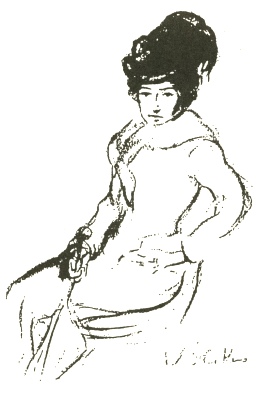
Florence Scovel Shinn


If ever there was anyone willing to "speak the word" of positive truth, it was Florence Scovel Shinn, an early 20th Century illustrator, New Thought preacher and bestselling writer. Her little book The Game of Life and How to Play It is still in print and is perennially popular.
Her books are slight and wonderfully old-fashioned in their language and examples. Florence was a dyed-in-the wool positive thinker, and in example after example she illustrates how people's lives have been turned around through taking a more optimistic view of things and employing the tools of prayer, affirmation and visualisation. Like many teachers of the time, she cast herself as a "metaphysician" (a wonderful job description!), and it is certain that her early training as an actress greatly helped her in her later career as popular preacher.
She died in 1940, and her books have influenced many modern writers in the self-help field, most notably Louise Hay.


"There is a supply for every demand."
Florence Scovel Shinn

Wednesday, June 10, 2009

Myrtle & Charles Fillmore


The Fillmores, founders of the Unity School of Christianity, were the great popularisers of New Thought, and their cultural importance and influence reach far beyond actual members of the Church.
Meeting reasonably late in life, Charles and Myrtle Fillmore were always an odd couple. At some point soon after their marriage, the sometime Christian Scientist Myrtle Fillmore attended a lecture in which the idea that God created only perfection sank into her consciousness at a really deep level. She meditated on this idea, and soon after she was cured of the tuberculosis which up until that point had been a death sentence for her. She never again suffered from its effects, and lived to a ripe old age.
Her husband Charles, a younger man, was an atheist and exceedingly sceptical about this new method of spiritual healing. However, upon witnessing his wife's complete recovery, he decided to investigate the metaphysical ideas of Christian healing in depth.
He and Myrtle became converts to this new religious idea, and after many years of study they established their own group, which eventually came to be called the Unity School of Christianity.
Charles Fillmore survived his wife by many years, and until his dying day he kept applying the principles of spiritual healing to his own legs, one of which was much shorter than another and required special shoes. He never managed to cure himself completely, but he maintained that his bad leg had grown many inches over the years, and the type of orthotics he required changed drastically as a result.
The religion they founded, The Unity School of Christianity, is still going strong. It is a positive thinking religion par excellence, with branches all over the world (including Australia). The Church is famous for publishing The Daily Word, a monthly magazine providing day-by-day affirmations and positive reflections. The world headquarters of Unity is also famous for maintaining Silent Unity, a 24 hour global prayer ministry.
The Unity Churches have distinguished themselves by being at the forefront of both New Age and progressive social thinking. They have sustained the careers of many notable self-help authors by inviting them to speak and lead worship, and Unity has an outstanding record when it comes to respect for gay people and other minorities. The majority of Unity ministers are women.
Charles Fillmore was a reasonably prolific writer, and he is most famous for his Metaphysical Bible Dictionary, his magnum opus that attempts to analyse the entire Bible according to New Thought metaphysical ideas.

Tuesday, January 27, 2009

John Randolph Price


One of the more colourful figures in the self-help movement is John Randolph Price. I am currently reading his Nothing is Too Good to be True, an ambiguous title if ever there was one. It is his usual eccentric and often inspiring collection of affirmations, prayers and madcap techniques to guarantee prosperity and success. The author makes some spurious claims as to the antiquity of the information presented in this book, making the usual assertions that his is merely a re-interpretation of a more ancient wisdom. Remember, The Secret claimed the same thing. In most cases the information is no more ancient than the forefathers of the self-help movement and the tenets of New Thought, Religious Science and Theosophy.
Mr. Price's great classic is The Abundance Book, normally coupled with is audio feature The 40 Day Prosperity Plan. Now, the significance of a 40 day plan will not be lost on some, and Price's method - which seems to me to be indebted to the work of Godfre Ray King - is based on the repetition of affirmations and attempting to imbue those affirmations with some kind of positive energy.
These are two area that I am beginning to realise will need some discussion in my thesis - the advocacy of affirmations and the wording of suggested affirmative phrases, and this idea of 'positive energy'.
Mr. Price is a charming, old-world figure, though in truth I find the books a little too rambling and hastily prepared to enjoy completely. They are released through Hay House, which should point toward a more spiritual emphasis in their teaching. Price was an advertising man who retired into the business of Metaphysics, setting up the obligatory spiritual organisation called The Quartus Foundation. He must be quite an age by now.

Tuesday, January 20, 2009

The Power of Positive Thinking


While I was in Phnom Penh I was delighted by the presence of really quite good second-hand bookshops - something that is absent from Vietnam. As usual in such places, there was an eclectic collection of books - heavy on chick-lit and murder mysteries, and also a substantial number of business and self-help titles. For US$3 I bought this well-thumbed copy of the self-help classic The Power of Positive Thinking, and it travelled with me all through Cambodia and Vietnam.
I had never read it before, so was surprised to discover that it is extremely religious in content - Peale's main advice throughout the book is to read and memorise scripture and use quotes from the Gospels as positive affirmations. I can't imagine it appealing at all to modern day self-help readers, who are largely an unbelieving bunch, and those that are interested in spirituality tend to steer away from the old-fashioned style of 'memorise scripture' Christianity.
It would be unfair, however, to characterise Peale as some sort of fundamentalist Christian idealogue trying to propagate a religious agenda by stealth. He was, after all, an ordained minister, and a famous one at that. Kind of like the Benny Hinn of his time, only nicer and more substantial.
Peale had been born a Methodist, but became a famous clergyman with the Reform Church in America, which was very similar in theology and worldview. And while the religious advice he offers in this book is perfectly inoffensive and acceptable to almost any kind of Christian, his own personal beliefs were reasonably unconventional and progressive - influenced as they had been by the New Thought teachings of Charles Fillmore and Ernest Holmes, and incorporating a species of spiritualism influenced by his reading of Swedenborg.
So it's an odd book - I wouldn't even call it self-help, more a prayer manual and a practical guide to using the Bible. But if you find it in any bookshop (and it is still in print) it will almost certainly be filed under "Self-Help."