Thursday, May 31, 2012

Library Books

Having come back from a long period abroad, it really is time for me to get my dissertation finished and ready for editing. My goal is for it to be more or less complete by the end of July (you heard it here, folks) and ready then to send to a proper editor who I (or at least, my research group) will be paying for. I want this thing to be absolutely ship-shape.
So I am back trawling the local libraries for liitle bits and pieces, overlooked books and hidden classics in the self-help field, and just generally things I might have missed in the past, during periods when I was intensely focused on one particular idea or topic.

So, from the Whitlam Library in Cabramatta (my local), I have brought home the following (from the top):


  • Stick to Your Dreams by Bill Allardyce and Steve Gray -  what I love about libraries is that you will frequently stumble upon self-published Australian stuff that would otherwise be impossible to find, or even know about. A note to self-publishers: for posterity's sake, please continue to donate your stuff to local libraries! Bill Allardyce seems to be a Victorian inventor and entrepreneur, and this is quite a lovely little book, which the front cover claims is a best-seller. 
  • Signposts for Life by Vicki Bennett - Bennett is a Queensland corporate trainer and motivational speaker who released a few popular self-help books in the 90s.
  • Supercoach by Michael Neill - Coaching seems to be pretty much dead as a self-help trope,  though it had a good enough innings. This is a 2009 Hay House book, and it really must be one of the last of the personal coahing books. 
  • A Whole New Mind by Daniel H. Pink - "Futurist" kind of books are always interesting, especially when read seven years down the tracks. In this 2005 book Pink posits a change in age, from information to conceptual. Self-help guru Po Bronson said this book was "mind-altering." We'll see. 
  • Thrive by Dan Buettner - Dr. Oz says it's a must-read, though I have never actually come across this author before. I hesitate to read it because it is endorsing a particular, trademarked, method, in this case the "Blue Zones Way." I have no idea what the "Blue Zones Way" is and in my experience these kinds of books leave you none the wiser. They are normally just extended sales pamphlets. I approach it with trepidation.  

Saturday, May 19, 2012

Currently Reading: The Magic

Rhonda Byrne is a self-help superstar. The once-obscure television producer from Australia became a household name in 2006 when she produced a simple talking-heads-style film about New Thought ideas and the Law of Attraction and released it as The Secret. Someone - it is not clear who - came up with a simply brilliant promotional campaign based on networks and influencers and releasing different versions of the film to key tastemakers and influencers. I worked in a New Age bookstore at the time, and remember dozens of people coming in and telling me how they had been given a version of a new film that was going to change the world....
It was a whisper-campaign that worked, and the film was quickly turned into a book which became a mega-seller which culminated in Byrne's appearance on Oprah. The Secret became a cultural artefact, and was ridiculed and scorned by people on all sides, all the while speaking in some way to the general public as it went on to sell millions of copies across the world.
Byrne has herself never been much of a self-promoter or even a public figure - she rarely gives interviews, and is something of an enigma. This year she has quietly released a new book called The Magic. Its emphasis is on gratitude and on the active expression of gratitude. This, says Byrne, is the key to a successful life. By actually invoking the words "thank you" we are employing a a metaphorical magic spell, hence the book's name.
For all of her critics and detractors (and they are myriad), Rhonda Byrne, or her team, is good at producing simple, clearly-expressed texts that communicate very well the basic tenets of New Thought, a religious idea that dates back to the 1860s. I am, in fact, a fan of Byrne's work, and I think she is one of the truly great post-modern authors, producing books that owe more to the traditions of television, film, advertising and  the oral traditions of Protestant Chrstian worship than to stale literary traditions and formats.
Though her message is repeated constantly, there is not an ounce of fat in The Magic - it has been edited to perfection and is an inspiring and entertaining read.
The central message of the book is that gratitude must be cultivated self-consciously. Byrne connects this to biblical narrative and the Western Mystery magical traditions, employing her usual scattershot approach to references, citations and quotes from across the canon of self-help.
I'm interested in the fact that this book kind of launched itself, with very little fanfare. I had no idea it even existed till I was browsing through Kinokuniya bookshop in Bangkok a month ago and saw a modest pile of the books on a well-placed table. Considering just how many copies of The Secret were sold, you would think the publisher would make more of a song and dance about a new book from the same author. Perhaps Byrne's famous reticence and shyness have an impact here. As it is, each new instalment in The Secret franchise seems like a surprise.
I call it a franchise deliberately. The Magic is designed and branded in such a way as  to advise the reader that this is an extension of The Secret. The cover art is an extension of The Secret's usual antique magical motif, and the first thing you see on the cover is the imprint of The Secret itself, above the title of the book. I think we are being presented with a series here, the publisher determined to remind the reader of the famous  book in order to sell this new one.
The book's format appeals to me because, unlike The Secret which was the presentation of quotes and ideas designed more for occasional inspiration than applied reading, The Magic is presented as a practical workbook, filled with 28 exercises designed to enhance the application of magical gratitude in your life.

"You will be captivated while you read this life-changing knowledge, but without practicing what you learn, the knowledge will slip through your fingers..."

It's an interesting exercise because there is not a great deal of literature that deals with the concept of gratitude as an exercise in mental and spiritual development.
Interestingly, a prominent Australian writer contacted me recently to tell me he has been working his way through The Magic and getting a great deal from it, because it was dealing in concepts and techniques that he had never actively considered before.

Wednesday, February 1, 2012

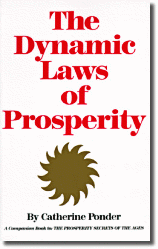
Catherine Ponder and the Rich Jesus

I am still working on my The Secret chapter -  it is the final chapter and seems as though it will never end.
One of the authors that Rhonda Byrne urges people to read is Catherine Ponder, who, she says, teaches the truth of the Bible stories - that Jesus, the prophets and patriarchs were in fact wealthy people who despised poverty.


When I worked in a New Age bookshop in Sydney in the 90s and 2000s Ponder's books were very popular, despite their high price. Published by DeVorss publications, Catherine Ponder is a Unity minister (ordained in 1956) who wrote quite a number of books, all based around her particular reading of the Bible as a prosperity text. After her endorsement in The Secret, it seems as though her books have reached a whole new generation of readership, and I notice that the Rev. Dr. Barbara King, one of my favourite women in the world, is teaching at the moment a course based on Ponder's books at her New Thought-based Hillside Chapel in Atlanta, Georgia.
I have gone back to look at Catherine Ponder's book The Dynamic Laws of Prosperity - a substantial text at 430pp. Ponder's style is folksy and engaging, and highly reminiscent of the earlier books of Florence Scovel Shinn. The book is filled with miraculous stories of people who have applied the techniques of New Thought in  their lives and achieved marvellous and unexpected results, usually in the shape of improved finances, work opportunities and greater prosperity. Ponder urges her readers to re-awaken to older dreams of greatness, happiness and wealth, and to employ the usual New Thought technologies of visualisation and affirmation to progress towards greatness. 
I'm not sure that Ponder needed to write quite as many books on the same theme as she did - the central message is repeated ad infinitum - but I have no doubt that she was sincere in her beliefs and her passion and enthusiasm is patent in her writing style. Hers was a thoroughly New Thought vision of the possibility of all people to be great, to be rich and happy and ultimately useful. There is, as well, something of the old-fashioned self-help notion of thrift and financial indepenedence, not to mention self-responsibility. The Ponderian subject is financially independent, working hard to enjoy good and beautiful things and to help others who may be less fortunate.
Ponder sees the individual as the primary source of their own poverty. The natural state is one of wealth, and if we would only stand aside we would allow the Universe to assert its own inevitable prosperity in our lives once again. She writes:

"In order to become financially independent, to the extent of having a constant financial income, it is necessary to discard a number of negative attitudes."


For Ponder, the first step towards wealth is the reorganisation of the mind, filling it with images of the  things we want and of the limitless possibilities before us. No wonder she is endorsed so heartily in The Secret.


  • For more information about Florence Scovel Shinn, one of Ponder's principle influences, look here
  • To read more about Catherine Ponder on her publisher's website, look here
  • An interview with Rhonda Byrne, creator of The Secret


Friday, January 20, 2012

Chicken Soup for the Soul in Vietnamese


My intense interest in the reading of American self-help in Asia sees me haunting bookstores in Ho Chi Minh City, Phnom Penh and Bangkok, seeing just what is translated, how it is presented, and who is buying it.


The Chicken Soup for the Soul books are ubiquitous in Vietnam. In my book Destination Saigon I mention how young students in Hanoi sit around the gardens of the Temple of Literature reading them. Bookstores carry shelves full of them, and they are always presented in bilingual editions. I suspect the simplicity of their stories has great appeal for the English-language learner.


Interestingly, they seem to have received endorsement from all of the main religions, because I have seen them for sale in Catholic and Buddhist bookstores alike.

Vietnamese friends who read them, even quite uneducated and unsophisticated people, are enthralled by the stories in the books and absolutely love them. I once watched a young fisherman lie down and read a pile of them in one afternoon, completely absorbed. When I ased him what he thought of them, he said: "They're brilliant. The most fascinating stories of foreigners and the amazing things they do. Foreigners are so interesting..." For him it was total escapism, an adventure in the exotic. The themes and messages of the stories seemed to have no relevance to his actual life. He was reading them as fantasy.

Monday, January 9, 2012

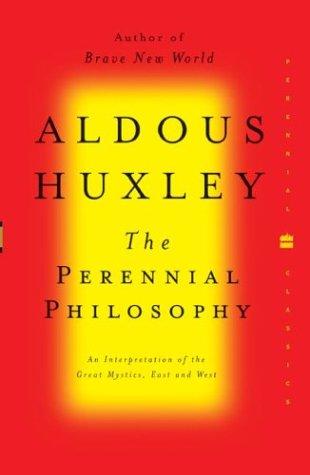
Aldous Huxley - The Perennial Philosophy

I am using Aldous Huxley's extraordinary book The Perennial Philosophy for my chapter on the uses of Buddhism in Western self-help.
I have never read it before, and will admit that it's a little heavy-going. It's one of the most peculiarly constructed books - quite a post-modern artefact. There are long passages of reflection and explication, chunks of quotation from the spiritual classics to illustrate his proposition, and then snatches of quotation from other spiritual traditions that further flesh out his theme.
I am surprised, however, by the relative sophistication of his understanding of Buddhism. At first I was put off by the generalisations he was making about the tradition (asserting its godlessness etc.), commonplace observations that have become cliches by now. But he soon delves into it much more deeply, trying to find a place in Buddhism for soul and God so that he can fit it into his scheme of a universal spiritual philosophy that unites humanity. In fact, some of his equivalinces and comparisons are quite clever, but perhaps that's because I agree with them.
The Perennial Philosophy was written in 1945, by which time Huxley was well and truly in his mystic phase having dabbled in the Vedanta school of Ramakrishna (to which he introduced Christopher Isherwood). It harks back to an old idea that there are core similarities that unify all of the religious traditions, and so point to a unified creative source that might be called God. It had been an idea much vaunted by the earlier Theosophists.
It was a reasonably popular book, and became immensely influential on the New Age scene. It was one of those books that was rediscovered and taken up with great enthusiasm by the counter-culture of the 1960s. Huxley sought to prove to Christians that spiritual truth existed in all the great religious traditions, and that the West had as much to learn from the East as vice-versa. In many ways it was a re-statement of the American Transcendentalist  philosophy of the late nineteenth century (for more on that, read Richard G. Geldard's excellent The Essential Transcendentalists).


Thursday, January 5, 2012

Louise Hay in Vietnam


While in Vietnam recently I was pleased to see that the self-help sections in bookstores had grown significantly.
Amongst the offerings were these parallel texts of Louise L. Hay in Vietnamese and English. I couldn't resist.


I wonder if they are licensed?
I have actually bought quite a few copies of these to distribute to friends in Vietnam, and the reaction has mostly been very positive - in fact, the ideas are quite radical to them. Some, however, scoffed after reading and said "It's all very well for foreigners to think like this..."

Friday, December 30, 2011

Thea Stanley Hughes

A name that is largely forgotten now in the annals of Australian literature is Thea Stanley Hughes.
Hughes was an innovator, a feminist, a dancer, a prolific author and proponent of self-help philosophies.
She came to Australia as a teacher of dance, establishing the Women's League of Health, an organisation that taught a style of dance-exercise that was, in many ways, the equivalent of aerobics in 1930s Australia. She was an advocate of the hygienics movement, a popular fad that endorsed clean living, healthful diet (mostly based around vegetarianism) and plenty of exercise and outdoors experience.
She remained an exercise and dance teacher for many years, but slowly she became an author as well. Developing some of the ideas of hygienics, Hughes began to write about the great and the self-reliant who she saw embodied in the explorers of early Australia. She used their biographies as guides to self-help and moral development.


This style of writing had a great pedigree, of course, having been perhaps most successfully done by the original self-help writer Samuel Smiles.
Thea Stanley Hughes moved on to more didactic material that was modelled closely on the conventional self-help books coming out in Australia in the 1970s.
Significantly, Hughes was an Anthroposophist, and most of her writings reflect the philosophy of Rudolf Steiner, to a greater or lesser extent. Towards the end of her life she became a quasi-mystical figure and developed something of a cult following. She was involved with the Christian Community, an Anthroposophical offshoot that sought to explore Christianity more deeply.
I am discussing Hughes' work in the current chapter of my thesis, which explores the New Age and the significance of minority religiuous traditions in Australian writing, most notably Theosophy, Swedenborgianism, Spiritualism and, as embodied in Huges, Anthroposophy.