Tuesday, January 8, 2019

Creativity: Some reading notes

Readers, I have had a rather dull and painful holiday period.

I had the flu most of December, and then in the final days of the year I had a tooth extraction which was rather traumatic and left me in horrible pain. I am still recovering from that. Rather unsurprisingly it has left me hesitant to go out at all, so I have been spending a lot of time at home, catching up on my reading and thinking about my creative life. Also, Sydney is horribly hot and humid at this time of year, so one doesn't really need an excuse to stay at home in bed with the aircon on. 

One book I have been reading for an important creative reason is Jay Baer's Youtility. I really hope to have a couple of books out in the next 18 months, and I have been thinking about how I can build their marketing into the creative process itself. Baer's book just jumped out at me as the one to really inspire me to think laterally when it comes to marketing and promotion, and so far it is absolutely filled with good advice. It's all about attracting readers (customers) by being helpful and genuinely interesting.

Travel writing has been a favourite genre of mine since I was a teenager  - I suppose that is why I became a travel writer! One travel book that I have long been fascinated with is Patrick Leigh Fermor's A Time to Keep Silence, a wonderful account of a young man visiting monasteries in Europe. I have picked it up again because I have finally decided to write another book about Vietnam (I am quite excited about this) and this is really my inspiration. It is quite a perfect little book, and if I could write something even half as good as it I would be doing well.

And on matters travel, Charles Dickens wrote two travel books quite early in his career: American Notes and, later, Pictures from Italy. These are often collected into one volume, and I am reading such a volume right now. The main reason is because these two books together represent the Book of the Year for 2019 at the NSW Dickens Society - of which I am Vice president. But even more importantly, I have to give a talk on them on Saturday June 1, 2019. It is interesting to see how seriously he took travel, making sure that, almost as soon as he arrived in America, he was off visiting institutions and educational places so that he could report back to his readers in England about them. No hanging about in the hotel room reading a book for Mr. Dickens!


Some spiritual creative sustenance for me with The Seeker's Guide by Elizabeth Lesser:

"Some hear the word spiritual and are encouraged by its whispered promises of grace; others are threatened by it, afraid of looking too deeply at their own behaviour, the unlived parts of their life, and ultimately, death." 


Another creative project I have begun researching in earnest is a book about the Ascended Masters, and to that end I have been reading an utterly fascinating book called Masters of Wisdom by Edward Abdill. Its subtitle is: "The Mahatmas, their letters and the path," and it is a brilliant read combining occult wisdom, historical gossip and some really deep-seated exploration of figures (and ideas) that very few people know about anymore.

Monday, May 28, 2018

Creative inspiration and guidance using Alana Fairchild's Rumi Oracle

I have collected tarot and oracle cards for about 10 years now, and these days I have rather an enormous cupboard full of them. Now, some of them are right up the very back and may not see the light of day for years at a time. Other decks, however, are very much more loved and used and are kept on the filing cabinet right next to my desk. Right at the very top of these sits Alana Fairchild's Rumi Oracle, with illustrations by Rassouli.

For some reason I just find that this deck feeds my creativity, and I use it in different ways according to my mood. On reflection I think I can probably break those needs down to:

1. Inspiration

2. Direction

3. Story intervention and

4. Tomorrow's work

We'll go into detail with how I do that in just a moment.

I came to this deck through sheer luck - I was actually given a copy of the deck by a publishing friend, and as soon as I opened it I realised I was in possession of something really special. I had known of Alana's work around Kuan Yin, and even had her deck and CD and DVD of that work, which I liked, so I was very interested in seeing something else she did. I couldn't know that very soon we would be thrown together professionally and that I would be lucky enough to work with her on several occasions.

As always, I began working slowly with the Rumi deck, taking it out whenever I felt like it, or noticed it in my room. Shuffling it slowly, drawing out a card and looking at it before returning it all to the box and putting it aside. I almost never launch myself into a deck, looking at every card and reading the guide book cover to cover. I want the pleasure to last longer than that!

What struck me was the occasionally enigmatic names of the cards and also the flowing, almost dancing, artwork of Rassouli. And then, wouldn't you know it, someone gave me Rassouli's book about Rumi and his book on creativity, and I was suddenly immersed in the work of this man who was responsible for the visual side of the Rumi Oracle. Rassouli, originally from Iran, is a lifelong student of Rumi whose artwork has been inspired by him since he was a young man. Alana Fairchild's profound interest in the poet and his messages found a perfect partner in Rassouli, and the two of them have put together a very powerful tool for writers, painters, mystics and all kinds of creative people.

It wasn't long till I began using this deck in my teaching work. I found that students, who I allowed to draw a card each (and keep it, meaning I went through a number of decks quite quickly), responded really well to the images and the poetic names of the cards. They also seemed to take students really deep really fast, which is always useful when you are leading a creative writing workshop.

Seeing the effect it had on my students, I became interested in using the cards with my own writing. Once again they seemed almost like the perfect companion, always providing me with an answer, a point of reflection or an action-based task that could keep me going and lead me perfectly to the next section of the novel I am currently writing.

There is nothing complex or sophisticated about the technique I use. I simply come up against a problem in my work (resistance, hopelessness, confusion, a headache...) and then I draw a card asking what Rumi has to tell me, by way of Alana Fairchild and Rassouli.

So, to go back to the little list of questioning techniques I apply in using this deck creatively, here goes:


1. Inspiration - Sometimes I am just plain stuck. I may have lost any energy to keep writing, I may be questioning my own right to even claim to be a writer, or I may be telling myself  that I am simply incapable of writing a novel. I need something, something outside of me, to give me a little nudge and offer me some hope. So I will simply pull out a card without any specific intention but to search for a metaphysical pick-me-up. And I always get one. So today I drew the "Commitment" card. I couldn't ask for a clearer message!  Commit myself to this project and to seeing it through to the end. Have some tenacity and persevere. The accompanying quote from Rumi, to be found in the guidebook that comes with the cards is really quite firm, and perfect for this message:

The awakened heart is like a lantern.
Keep it sheltered
from the turbulence
of the winds of desire.


2. Direction - Writing comes in fits and starts. Some days I know exactly where I am going, and the passage and structure of the novel seem to all be in perfect place. And then suddenly, I am being plunged down a vortex of uncertainty and feeling lost and totally in the dark. This is when I will get the deck out and ask myself: "What is my direction here? Why the hell am I doing this? What is my reason to continue?"

Asking this, I pulled the card "The Human Gift." In the image an angel of inspiration, of remembering, seems to be paying a visit to a woman in despair. When I sit with this card I realise what it means to me. I have been given a gift, and if I don't use it then what am I even doing here? My human rebirth is absolutely precious and I should make the most of it - not even wasting a single hour.

Part of the verse from Rumi that is offered in the guidebook to accompany this card reads:

Such kindness is offered by the beloved,
yet so much defiance and resistance comes from you.
Such grace is offered by the beloved,
yet so much fault and failure comes from you.

This isn't a guilt trip, and it is not about beating ourselves up and feeling even more miserable. It is about acknowledging the precious gift that we are, and the gifts that are offered us each and every day. It's about turning hopelessness into sweetness.


3. Story intervention - This is where it comes closest to actually cheating, but all writers do this in one way or another and so I am simply being honest. Sometime I reach a place in my work where I have done everything, and it is all  there, down on paper, except the spirit. I could read over it and think: "Well, that is perfect prose, but why am I so damn bored reading it?" This is where I know I need to inject  a little extra, and for me it is a sense of spirit. What might my character be thinking, or where might she be heading. What quality is at work here, or should be? If the actual text won't offer up its mysteries (and after a couple of hours it can be a stubborn beast!) I know I can open up my lovely box of Oracle cards and see what the Universe, by way of Rumi, might have to offer me. Then I can go back over the chapter I have written and make a change, or an addition. Sometimes it is the tiniest thing - just a word or two, and yet the entire piece is transformed because of it. no mystery of course. I have just allowed a greater force of spirit into my writing.

So I drew the card "I surge on the  uprising wave of love" and I almost gasp at the beauty of the idea, and of the sense of reassurance. But of course, at this moment it is not about me - it is about my character. I am applying this to her. And what do I do? I keep writing knowing that the outcome of this situation I am describing, until now unresolved, will in fact be a positive, even an inspiring, one. It will prove the love of this universe.

Alana's advice for interpreting this card reads:

"What we always have at our disposal is choice as to how we respond to these affecting movements and cycles."

My character has a choice to employ her power.

An interesting side-note: I always draw this card. It is obviously a message I need to hear over and over again.

And finally....


4. Tomorrow's work - I always like to finish somewhere tidy in my creative work - normally right at the very end of a chapter. This helps keep things organised, but one of the downsides is that I am left in a state of high excitement. How am I going to resolve all of this? What is going to happen in the next chapter and how can I possibly relate it to this one I have just finished?

My answer is often to pull a card and give me a bit of an overview as to what might be swaying things tomorrow. I will keep  this card out, propped up against my computer screen to remind me: you have a message from the Universe. make sure you keep writing.

For this one I pull "The all-encompassing hand," and even looking at the exquisite artwork helps me to understand jut what tomorrow has  to offer, and why I am engaged in creative work in the first place. I do feel led to this, and when I am really in the flow I feel exactly right - as though I am cupped in that exquisitely soft and comfortable all-encompassing hand.

When I look at the guidebook to see what channeled guidance Alana has brought through after I have gazed at this beautiful picture, I read:

"This sacred grasp pulses with love divine, and there is one hand, holding and held, one being, loving and loved, though we may appear by less ecstatic angels to be two."


Naturally, you don't have to use this deck to achieve the same results. I just wanted to use it as an example because it is one of my own most-used items of creative inspiration. Any oracle deck will do - you will know yours when you find it. But I can vouch for the efficacy - and beauty - of the Rumi Oracle. 


Tuesday, January 2, 2018

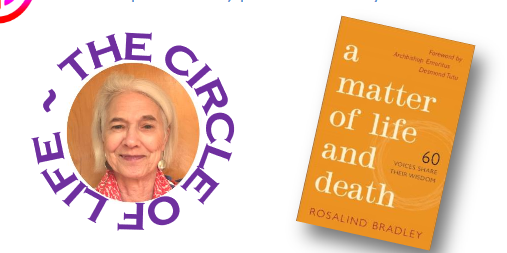
Sydney author Rosalind Bradley will be talking death at the New Church in Roseville, Friday 23 rd February 2018, 7:45pm,


One of the cornerstones of my creativity system is to go to author talks and lectures. It's incredibly stimulating for the creative mind,  you get to meet some fascinating people, and you can absorb new and interesting ideas.

I am also a really big proponent of dealing with death in a mature way, and I think it's something we really don't do very well in Australia.

So I am very excited to announce that my friend Rosalind Bradley is talking about her book A Matter of Life and Death at the New Church in Roseville in February.


I am definitely going to this event, and I think you should too - it looks fascinating:

Swedenborg Association of Australia, Friday 7:45pm, 23rd February 2018
at the New Church
4 Shirley Road, Roseville

$5 members, $7 non-members/concession

The Circle of Life

Presented by author Rosalind Bradley

Ros  talks  about her latest book for  which  she collected 60 amazing stories from a fascinating range of people from all walks of life.
Sharing their unique insights and wisdom about death and dying using  a chosen image  or  passage which best expresses death for  them,  they reveal that beyond  the  heartache
and mystery of death lay invaluable lessons on how we live our lives.

About Rosalind

After  life in  the  UK,  Ros  had an  eclectic  career from teaching in remote  Papua  New  Guinea to
freelance  marketing  in  Sydney.
She  worked for charities including  The Fred Hollows  Foundation, was Board  Member  of  The  Asylum  Seekers  Centre  of  NSW, and Eremos, a forum for exploring Australian spirituality.  Her  interfaith interest was triggered while in London during the 2005 bombings, resulting  in  her book Mosaic: Favourite  prayers  and  reflections.


Her mother’s death sparked a curiosity into death leading her to compile A  Matter  of  Life  and  Death.

A volunteer  biographer  at Sacred  Heart  Hospice  in  Sydney,  Ros also worked  with  PalliativeCare NSW and their Volunteer Program.

More SAA events info at
www.swedenborg.com.au

Thursday, October 5, 2017

The 1968 club - 30 October to 5 November, 2017


I love the blog Stuck in a Book, and I recommend you put it on your regularly checked blog list.

They often list reading challenges, though I am always hopeless at such things.

Still, I have decided to do this year's 1968 Club - a pledge to read a book published in the year 1968, and to blog about it between the 30th of October and the 5th of November.

I was going to do Philip K. Dick's Do Androids Dream of Electric Sleep?, but I was worried that that might just be a little TOO trendy at the moment, with the new TV series and all. Anyway, I went downstairs to my fiction shelves and, while looking for Dick (yeah, they aren't in any kind of order), I stumbled upon one of my favourite childhood books: I Own the Racecourse! by Patricia Wrightson.


This is an Australian children's classic, and used to be a huge book, though it seems to have been forgotten. I recommend it to everyone, and even sent a copy of it to the wonderful author Vanessa Berry, who told me she loved it and read the whole thing in a day.

So, I will read it and see how it has dated. Patricia Wrightson is a fascinating writer, and I have been thinking about doing a talk on her for some time.


Maybe this will inspire me?

Oh, and one of my firm beliefs about creativity is that reading old books inspires you to be more creative. Even better is re-reading old books, especially books that meant something to you a long, long time ago.

What book would you select from your childhood reading to re-read today? What year was it published in?

Monday, July 24, 2017

Researching a new talk: Monsignor R. H. Benson

Sadly this subject DID prove too obscure - I have found out the talk is not going ahead :-(  But keep an eye out - I will attempt to resurrect it in some other form in the future. And I have become so absorbed I am seriously considering doing a book....


One of the ways I love best to explore my creativity, learn new things and force myself to work hard is to give public talks. On Friday I am giving a two hour talk on Monsignor Robert Hugh Benson, an admittedly obscure subject, and it has been tough getting people to book in. But, as with most obscure subjects, it is absolutely fascinating, and I have been loving the research.

My research always begins at home, and not online. I have a substantial personal library which I have been building since I was 17 years old, so for almost any subject I could prepare a talk just using the resources I have on my own bookshelves. This morning I am looking up tidbits about R. H. Benson in Geoffrey Palmer and Noel Lloyd's E. F. Benson as He Was.


This is a charming book, with a smattering of facts about baby brother Hugh's life. I will see if they are sufficiently interesting to include in my presentation, or to flesh out a point I have already made in what I have written so far.

My next step is always the NSW State Library.


I love being there, for a start, and there is something about being stuck in the reading room that makes you work really hard.

My research notes from a gorgeous 70s biography of Monsignor Benson written by a nun. I didn't even know about this book until I visited the State Library of NSW


It's also handy because I can go off on a research tangent.


A list of new research directions I plan to follow up. I note these down as I discover them in other books. As you can see, I went in principally to research Monsignor Benson and ended up looking into upcoming talks about Dickens and Kenneth Grahame


I can also work on multiple projects while I am there, filling up pages in my daybook with notes and research for future projects as well as the one I am working on. I actually have to limit myself with my library visits, as I could easily spend my entire time there going down research rabbit holes.

And finally it's ebooks and the net, never my favourite place to research, though perfect for finding out essential last-minute information.

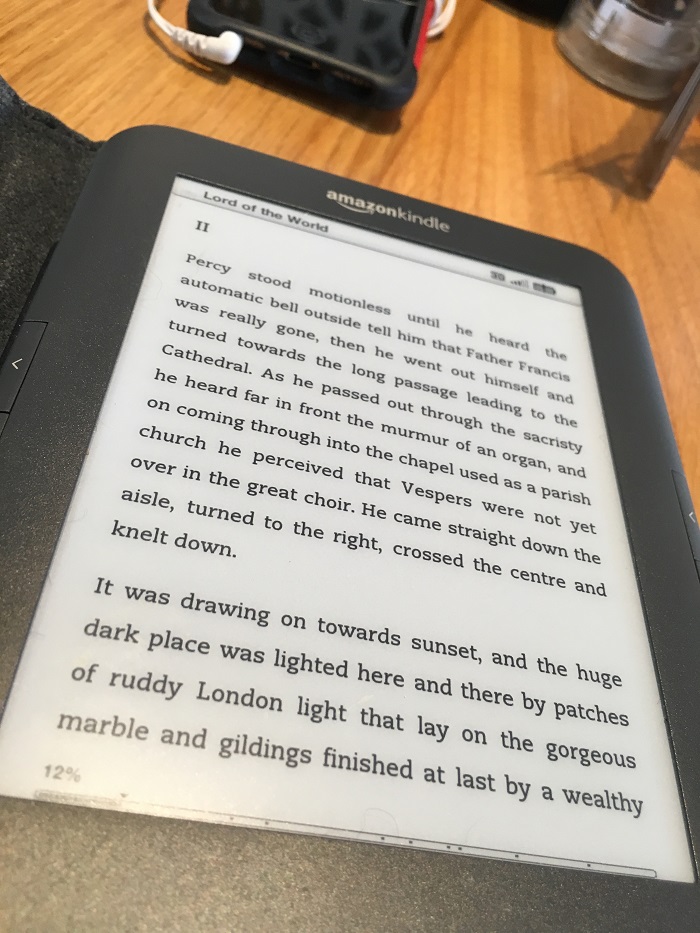
And it's also cheap and convenient. So, instead of going to abebooks and ordering an Edwardian hardcover and waiting 2-6 weeks for it to arrive from Maine or Ireland, I can get a free ebook of R. H. Benson's famous dystopia Lord of the World from Project Gutenberg and start reading and highlighting relevant sections.


I am also reading his book on Lourdes, and the brilliant and quite eccentric biography of Mary Benson, his mother, As Good as God, As Clever as the Devil.

Wednesday, April 26, 2017

Gay May Reading list

Seems I will be going gay for the month of May, my list being made up of books by, or about, gay men. It comes about because this month I did a talk about E. F. Benson, and I am in about the fourth month of a Denton Welch obsession, courtesy of a previous Barbara Pym obsession. So, here is my Queer Lit. reading list for May (from the top):


The Challoners by E. F. Benson - I don't think I have ever truly enjoyed Benson's non-Lucia fiction - it is all very much of its time. But I am going to give it another go and try this one, written in 1904.

Les Enfants Terribles by Jean Cocteau - Oh, I didn't mention my Jean Cocteau obsession as well. I am going to France in September so looking forward to visiting all of the Cocteau spots. I am also, slowly, piecing together a talk about him which I haven't pitched to anyone yet. If you want me to come and give it, let me know.

The Journals of Denton Welch - Enough said, really. And do listen to the podcast about Denton Welch on Backlisted.

Lucia Victrix and Lucia Rising by E. F. Benson - These are compendium editions which contain all six novels between them. Because I deserve it.

A Voice Through a Cloud and Maiden Voyage by Denton Welch

Cecil Beaton's Fair Lady - I have twice given a talk on Beaton in Sydney and it has been surprisingly very popular with big attendances each time. re-reading this diary of his time making the movie of My Fair Lady and considering doing the talk again somewhere else.

Three Extraordinary Ambassadors by Harold Acton - Acton is one of my favourite writers and should be better known. His books always enchant me.

Lucia in London by E. F. Benson - This means I will be reading this book twice in May, but why not? It's my favourite of the Lucia novels, and I read it at least once year. He lets Lucia get truly horrible in this one, and it's great.

As We Are by E. F. Benson, this work of memoir written late in his life is just beautiful, and at times very funny. Right up there with the Lucia books in terms of entertainment value.

Jean Cocteau by Claude Arnaud - Yep, I have to bite the bullet. I know I will love it, but gosh it's huge!

Saturday, January 21, 2017

My cultural 2017 in lists

This is a fabulous idea I have blatantly stolen from the fabulous Andy Quan.

I have long kept a record (in a special journal) of my reading, but I love Andy's idea of listing the other stuff I have seen. This list will be maintained throughout the year, as a record of how I found creative inspiration and where I went to find it.

Concerts

Theatre

Lectures and Author Talks

Neil McDonald talking about his Chester Wilmot book at both State Library of NSW and Ashfield Library Feb. 2017

Jo Henwood on the Icelandic Sagas at Ashfield Library  Feb 2017

Collins Hemingway on the Napoleonic wars in the time of Jane Austen at the Jane Austen society of Australia, Feb 2017


Exhibitions

Beyond Words - calligraphy exhibition at AGNSW, January 2017

Margaret Olley exhibition at S H Ervin Gallery, February 2017

Books

Ransacking Paris by  Patti Miller

Coffinman by Shinmon Aoki

Tales of Wonder by Huston Smith

The Way of the Traveler by Joseph Dispenza

55 Keys by Alana Fairchild 

The Memoir Book by Patti Miller 

Kali: the Mother by Sister Nivedita 

Movies

How Green Was My Valley

Television

Narcos Series 1 and 2

Real Housewives of Melbourne Seasons 1, 2 and 3

Wednesday, September 21, 2016

The 1947 Club


I like online reading challenges because they are often so bizarre and arbitrary that they encourage me to read something I normally would never consider, or that I have a long way down my "Must Read" list.

I have already signed up for the 1924 Club, but then I noticed that, the week before, they are running the 1947 Club. How could I resist?

So basically, to take part in this challenge you have to read in the set period (10-16 October) one or more books written in 1947. My first instinct was to go to Nancy Mitford, but the book she published in 1947 was The Pursuit of Love, and I have already read that twice this year. It would be cheating to do it the third time, and besides, despite my great love for that book I don't really feel like reading it again just now.


So I checked Kaggsy's Bookish Ramblings and one of the books suggested over there was Elizabeth Taylor's A View of the Harbour, so I am taking the opportunity to finally read Elizabeth Taylor. I have also decided to read Evelyn Waugh's obscure novella Scott-King's Modern Europe. In fact, until I googled "Evelyn Waugh 1947" I hadn't even heard of it.


So won't you join me?


Saturday, September 3, 2016

A successful talk about Cecil Beaton at Ashfield Library


Photo by Thang Ngo


I did one of my Saturday illustrated lectures at Ashfield Library yesterday and it went swimmingly.

The subject was the fabulous and glamorous Cecil Beaton.

Cecil Beaton and Alice B. Toklas


Good numbers, which was encouraging. I spent some money, for the first time, on doing a sponsored post on Facebook, and I think this made a difference - more of my friends came than usual, I am sure because they had noticed the post. Not sure it had any impact in bringing in new faces, though, but there were certainly plenty there.

I was happy to note quite a few people who usually only go to weekday sessions coming along to a Saturday morning talk, so that was good.

The celebrity-studded audience included Women's Weekly astrologer Jessica Adams, Lindfield Bookshop owner Scott Whitmont, lecturer and literary historian Joanna Penglase and writer and guru Maggie Hamilton.

The talk went seamlessly, except for one slip-up where I showed a slide and said it was Greta Garbo when it was in fact Katharine Hepburn. Embarrassing :-) But they were a forgiving crowd, and I soon got over that little slip up.

These talks take  up a lot of time and requires hours and hours of reading a research, so I am glad that people come along and enjoy them. These kinds of activities are an increasingly important part of the public service that libraries offer their communities, but they can only continue if people actually support them. To see so many there yesterday was heartening indeed. The program at Ashfield Library is particularly good, rich and varied - do check it out, and do schedule in all of the amazing talks and activities you can.

On that note, here are some of my upcoming activities at Ashfield Library:


Hope to see you there!


Tuesday, July 26, 2016

Doing the meaningful things first


Sometimes we don’t get around to doing our creative work.

We get busy doing all the things that need to be done and before you know it it’s 3 in the afternoon and we are too tired or have a headache or think we might be more creative tomorrow.

It’s never going to happen if you do it that way. Let's face it, you’ve tried it, and it didn’t work.

Instead, make a small commitment to do something creative every day, and do your small creative commitment first thing. I know some people who even do it before breakfast, but I need food and caffeine too much for that. But you do need to move your creative expression right up the list, right to the very top. Then things will start happening.

Be aware of how you’re spending your time and who you are spending it with. Create your days with some intention – don’t let them drift by in chores and distractions.

Let’s answer these questions:

What did you learn to do better this year?

What activities have been taking up more of your time than you would like?


Do you have enough time for the people you love?


Are there any things you’d like to be doing that you don’t do?


Is there any way you could make faster progress in doing the things you’d like to be doing? 

These questions come from p. 9 of David Riklan’s excellent book 101 Great Ways to Improve Your Life.

Sunday, June 12, 2016

40 days of journal writing....


Yep, that's it.

I am making a pledge to journal every morning for 40 consecutive days, and I will chart my progress on here. Of course, I journal 4 or 5 times a week as it is, but I want to explore this as a creative and spiritual discipline and see where it might take me.

We need to create a habit of journal writing.

I would invite you to join me, from today, in your own 40-day challenge of journal writing.

The best thing about a challenge is that, if the well really is dry, we can write about that very sense of not knowing what to do.

But in our creative life there is always something to write about – some challenge, some question, some joy, some realisation.

If we are on the creative path, every day offers a new insight – at the very least a sentence we can write.

Even if we did a sentence a day – what a fascinating 40 sentences that would be!

But I would urge you to consider 40 days, 5 minutes a day, simply asking the page: what do I need to know right now?


There is no right or wrong answer!

Sometimes our creative spirit is expressed in the quotidian. Perhaps the very best and most powerfully creative thing you could do that day is the ironing – it’s been piling up for days.
But write about how you feel – what were your thoughts during the ironing? How might we have made it a creative task? Or perhaps it already was?

Monday, June 6, 2016

Journal Your Challenges - an exercise


Sometimes our challenges really build up and begin to suffocate us.
And sometimes we are not in a position to share these worries with other people. Sometimes sharing them with others is not the right thing to do.
But we can always share them with our journal.

Exercise:

Write down a  few sentences about a challenge you are currently facing in your life.

Write down the principal emotions that challenge evokes in you.

Can you turn this challenge into a question? Or is there some specific element you need to work out? Write it down.

Now lets sit together in meditation for a few minutes, our eyes closed, asking ourselves that question, looking for answers. But please just stay in meditation – no writing anything down.

Keep asking yourself that question, over and over. It is your mantra, your koan.

Now write down any responses or answers you received. They don’t have to make sense. They don’t have to be the perfect answer, or any answer at all. Just write down what came to you as you sat with that question.

Any insights?

Were you prompted to take some action?

I want you to review the observations that come to you during this process. What doesn’t make sense today may be perfectly clear in two days time.

These responses have come from somewhere deep inside you – or perhaps outside of you.

Either way, this is a process that makes you realise that your journal is an invaluable practical friend. And it will never get bored with your silly questions – and it cant be hurt by your doubts or annoyed by your anxieties.

Saturday, January 16, 2016

MONDAY, 8th February 2016 at 7.30pm - Walter Mason will lecture on Om Mani Padme Hum & the Dragon Kingdom of Bhutan


MONDAY, 8th February 2016 at 7.30pm at the Academy of Light


Walter Mason

Walter Mason

Om Mani Padme Hum & the Dragon Kingdom of Bhutan

Walter has recently returned from the remote and mysterious Himalayan Kingdom of Bhutan. In this tiny Buddhist nation almost everyone is devoted to the practise of the mantra of “Om Mani Padme Hum,” and believe it brings them good health, luck, enlightenment and peace of mind.
In this talk Walter will discuss the practise and meaning of this mantra, and how we can incorporate it into our own lives. We will also explore the crazy wisdom of their beloved sage Drukpa Kunley, devotion to the Medicine Buddha and some of the other fascinating elements of the spiritual lives of the Bhutanese.


Where : Mosman Arts & Community Centre, Cnr of Art Gallery Way and Myahgah Road. When: Monday Nights 7.30pm – 9.30pm Entry : $15.00, Concession $10.00 Finish time is 9.30pm

ALL WELCOME – ENJOY LOVE, LIGHT & LAUGHTER

Wednesday, December 30, 2015

The 16 books I'm going to read to inspire my creativity in 2016


I just read Danielle Duell's post on Linkedin in which she listed the 16 books she plans to read in 2016, and I thought it was a terrific idea. So here are the 16 books I have selected to read next, books that I think will especially stimulate my creativity throughout the year.

1. Walden by Henry David Thoreau - I've never read this classic of American literature, and I feel it's time.

2. One Day My Soul Just Opened Up by Iyanla Vanzant - I read this back in 2010 when I was travelling around Cambodia, and it had a profound effect on me. I feel it's time to re-visit it.

3. Fear Not by Carol Tice - I think it was recommended in a blog post or on a podcast, but I just feel like this might do me some good. My confidence waxes and wanes.

4. The Miracle Morning by Hal Elrod - I don't actually need much convincing that early rising is a great productive habit. I do need to discipline myself more, though.

5. Think and Grow Rich by Napoleon Hill - I have actually read this one a couple of times before, but not in a few years, so it's time to see what I might be able to get out if it right now.

6. The Achievement Habit by Bernard Roth - You can tell I am having anxiety issues about productivity.

7. All of P.G. Wodehouse - OK, this is a bit of a big ask, but at some stage in 2016 I want to teach a course on the English comic novel, and this just has to be done.

8. All of Ian Rankin - Another mammoth project. I am working on a crime novel of my own, and everyone says that Rankin is the one to study.

9. Letters to a Young Poet by Rainer Maria Rilke - Never done it, and it is a glaring gap in anyone's library of creativity. Plus I'll be able to look my friend Stephanie Dowrick in the eye, as she wrote the book on the subject.

10. The Cruise of the Snark by Jack London - I loved Jack London novels as a boy, and I still think he is an absolute master. This is a book of his I haven't read, and hadn't even heard of it till I saw Susannah Fullerton give a lecture on the Mills & Boon company, who originally published this.

11. The 48 Laws of Power by Robert Greene

12. The Art of Memoir by Mary Karr - Because I am a memoirist, and because I teach memoir writing and love the form.

13. The Art of War by Sun Tzu - I've never been able to finish it. But I'm meant to know a lot about Chinese culture, so it's kind of embarrassing.

14. The War of Art by Steven Pressfield - I love it, and this will be my third time. I always get inspired by this book.

15. The Art of Work by Jeff Goins - Because he's a nice guy and one of the thought leaders I've decided to follow closely this year.

16. Bleak House by Charles Dickens - I adore Dickens, and I am a member of the NSW Dickens Society, but I have never read this one. More gap-filling.


Wednesday, December 2, 2015

Todd Henry's Die Empty - a review


I don’t think I have ever endorsed a book with such a controversial title. For me it is without any import – I rather like the idea of dying empty, having used up each and every ounce of creativity and passion. But a surprising number of people react negatively to the title and the concept. I have used this book several times now teaching creativity courses, and there is always one or two people who shrink from the title.

If you are one of those, I apologise, but I also urge you to overcome you initial reaction because Todd Henry’s book is really quite exceptional and has been a major source of creative inspiration to me for some time now.

Todd Henry


In Die Empty, Todd Henry offers some indispensable advice on avoiding the aimless life and recognising the potential for happiness here and now. Henry is one of those ubiquitous modern marketing gurus in the Seth Godin mould who have sprung up in the age of podcasting and social media with a unique style of life and career advice specifically aimed at a media and technology savvy generation. He is always interesting, and never more so than in this book.

It is also quite brutal advice, encouraging people not to be self-deluded. Henry offers the example of the hapless, hopeless contestant of the TV reality talent show, the one destined for the “worst of” show who is surrounded by well-meaning mothers and friends who encourage them in their delusions. Yes, well have innate talents, but in any cases these talents require a great deal of careful discernment, and can potentially be overshadowed by externally-imposed (or confected) dreams of greatness.

Neither is success necessarily about wealth or possessions. Henry is not of the “3 Ferraris” school of motivation, with a cheque for a million dollars pasted up on one’s ceiling. Not that there’s anything wrong with wanting some sort of material comfort, it is just that Henry suggests much of what fulfils us and uses our greatest talents may not necessarily be big moneyspinners. It is ultimately more important to create energising personal narratives built around more lasting motives.

Henry advises us all to take “small, calculated risks” each day in our quest to become greater and to be of greater use in this world. It is passion for our actions that drives us and makes us happy. The age of duty is perhaps over, at least for those of us living in the more privileged world. If we are not bound to take on work that will support our families and guarantee their welfare then we find our moral obligations in other places, principally in the direction of those vocations where we find ourselves belonging. Our moral duty has shifted to an obligation to make the most of our talents, and to use them in life-celebrating and fulfilling ways. To ignore these talents and focus instead on a mundane life is its own sort of sin.

It’s a challenging book, as the title indicates, and is not for readers who want to look for excuses. Henry tells us we have to acknowledge the areas of resistance in our lives (echoes of Steven Pressfield’s work here) and move on through them. Perhaps at heart we all want to be great, or at least to contribute something to the greater good of humanity reading Die Empty might make you start taking this destiny more seriously, and convince you to start planning the final years you have left. An uplifting and motivating read, this is a book I am certain to return to again. Check it out.

Monday, November 9, 2015

20 Ideas a Day


“Great minds discuss ideas; average minds discuss events; small minds discuss people.”
Eleanor Roosevelt


One of the daily practices that has enriched my life and convinced me that I am an endlessly creative machine is the ’20 Ideas’ ritual. It is something that still excites me, and I love it so much I can’t wait to sit down and do it – on the train, at my desk, at a coffee shop and sometimes even in bed just before I go to sleep at night.

It’s a simple idea, and one which I first heard listening to one of Brian Tracy’s audio programs. Much to my shame, I can no longer remember which one, and it is one of my projects to re-listen to them so that I might be able to reference it more properly.

It is also an idea that had popped up again more recently in a book by Claudia Altucher called Become an Idea Machine – one to check out. Writing out ideas harnesses the power of intention – we make solutions seem possible, and remind ourselves of our own incredible resourcefulness. And we provide ourselves with physical evidence.

So, now to explain this radical method and how it works. Prepare yourself to take copious notes as I expound on it in intricate detail. Here it us:

Sit down at some point, every day, and write down 20 ideas about a subject that is worrying you.
Or anything at all.

That’s it.

20 numbered points, one beneath the other.

Then go and get a cup of coffee or listen to an old Chantoozies song. Your work is done for the day.
I do it every day. Beginning a project, in the middle of a project or deep in the detail of trying to make a project work. I simply sit down and think of a problem or challenge or event that is happening in my life. And then I think: “What are 20 things I could about this, 20 ways I could approach it, 20 ways to make it happen?

And then I list them. The thing is, it needs to be 20. The first 4 or so are easy. The next 5 get harder, and the last few are impossible and you start writing down crazy stuff, or consulting other resources. And that’s where the magic happens. You must make yourself write down 20 possibilities, no matter how ridiculous. Interesting things can often crop up right at the end.

Now don’t get stressed. This is not a “To Do” list. You don’t have to do anything with any of the ideas. They are there to prove a point – the point that you are an inventive, resourceful person who has a practical response to anything. And sometimes we need that proof.

Let me give you a practical example, using a real-life situation and an actual list.

Topic: I want to sell more copies of my Destination Cambodia ebook

Ideas:

1.    Do a blog tour

2.    Do some Facebook ads

3.    Do some more talks about Cambodia around the place

4.    Get people to review the ebook on Amazon

5.    Pay some attention to my Amazon author page to see if I can attract more readers

6.    Do a blog series on Cambodian topic with this as the call to action

7.    Review some more Cambodia-related books

8.    Take a new trip to Cambodia to give me some more material to write articles etc. and so remind people about the book

9.    Host a travel-writing workshop at the local Cambodian temple

10.    Lead a Cambodian-themed food tour through Cabramatta

11.    Teach my Cambodian history course again at adult education places

12.    Do my talk about Angkor Wat at some more places

13.    Do some more library events

[OK – these all came easily. But right here I was officially stumped. So this is when I draw upon my resources – either start dreaming or look up some ideas online or in my own notes]

14.    Lead a tour to Cambodia [having already failed to get one of these tours up it is a painful and quixiotic idea, but it is still an option and still something I’d like to do].

15.    Get some ideas for promotion from Success magazine [this from a master list I keep of things that I have done before to promote things. Success magazine is a great resource for ideas, which is why I have subscribed for years].

16.    Publish some Cambodia-related pieces on Linkedin [from Fauzia Burke’s blog post 7 Great ways to Promote Your Ebook, which I just Googled].

17.    Do some promoted posts on my Facebook Fan Page. [I’ve never actually done this before, and have no idea if it would work, but I am here to try new ideas, right?].

18.    Send a special reminder to my email list [from Denise Wakeman’s blog post 19 Ways to Promote Your Ebook, which I just discovered online. I normally don’t send such sales-ey emails, using my enewsletter to promote events, blog posts and interesting things I have discovered. I am sure my list would forgive one such].

19.    Use Canva to create some really eye-catching images for Google+ with a link in the description. [OK, I know Google+ is pretty much a spent force, but the people left on there seem really committed, and I know for a fact that most of them have never bought my book. Some might not even be aware of what I write about. This could result in a couple of sales]. 

20.    Create a list of friends, fans and supporters and approach each of them individually and ask if they would send out an email or social media message on my behalf [this from a blog post on okdork.com called How to get an eBook to #1 on Amazon. I sometimes do ask friends to help spread the word, but I have never compiled a proper list as this writer suggests doing. This has worked quiet well for me in the past, and I have also recently been approached by someone to do just this, which I was more than happy to do. Some people like being asked to help].


So there you have it. 20 rather good ideas that I am actually going to take the next step with and turn into a real Campaign. But maybe more on that process in another blog post.


Wednesday, July 22, 2015

The Fabulously Creative Emily Maguire

Emily Maguire


Before I went to hear Sydney author Emily Maguire speak at Leichhardt Library last night, I dropped into Berkelouw's on Norton St. There I saw lots of copies of the new winner of the Miles Franklin Award, Sofie Laguna's The Eye of the Sheep. And who should be endorsing it right on the front cover but Emily Maguire! It was a sign. I definitely have to read this one.
The last Miles Franklin Award winner I read was Michelle De Kretser's Questions of Travel, which is simply one of the most superb Australian books ever written. I always have a soft spot for the Miles Franklin award because A) I rather like old Miles and her dabbling in Christian Science and B) Sumner Locke Elliott won it in 1963.


Walter Mason and Emily Maguire


Emily was there to talk about her most recent novel, Fishing for Tigers, a book set in Hanoi. I was fascinated to hear about her experiences as a writer in Hanoi, trying to make sense of a new culture and also of the other Westerners living there and how they lived alongside the Vietnamese. This is very much what the novel itself is about, and so I was fascinated to hear about the thoughts and experiences that lead to it.

Emily said she first had the motivation to write a Hanoi novel while sitting at Van Mieu, Hanoi’s Temple of Literature. This old Confucian university is indeed a beautiful place and, if you can catch it on a quiet day (increasingly difficult) it is a great place to reflect on matters literary. She searched for silence in Hanoi, a city she described beautifully as "overwhelmingly cacophonous." It was in this cacophony, however, that she began to write her fourth novel.

She had been in Hanoi on an Asialink fellowship, and she was working there editing English translations at the state publishing house. And while she was inspired, her central character didn't come to her till she was walking around Hanoi’s fabulously grey neo-gothic Cathedral. This district, too, is an incredibly romantic and inspiring one, and I am not surprised the muse descended there.

Emily speaks of her fascination, as well, with the expat community in Hanoi, a community she admits to spying on in the bars and restaurants that catered to them. And while at work she was learning about Vietnam's long history of female warriors and heroes, a history that spoke to her feminist convictions. She also spoke about her return to Australia when she realised that there were considerable differences in perception of and feeling towards modern Vietnam among overseas Vietnamese communities.

Emily Maguire is an ambassador for the Room to Read charity, which works in Vietnam providing books and educational facilities to disadvantaged children, with a particular focus on girls' education. She spoke about how writers can use their creative platforms as a tool to do greater things. Sometimes there is no place in our work for didacticism, but we can use our art to help us teach people about issues and ideas so that, in Emily's words, "the creative project and the project of being a decent human being can be entwined."

Most excitingly, Emily told us that she has a new book coming out in March 2016 called An Isolated Incident. I can't wait!